

After School Tips, Tricks and Resources
Why Students Should Learn Magic
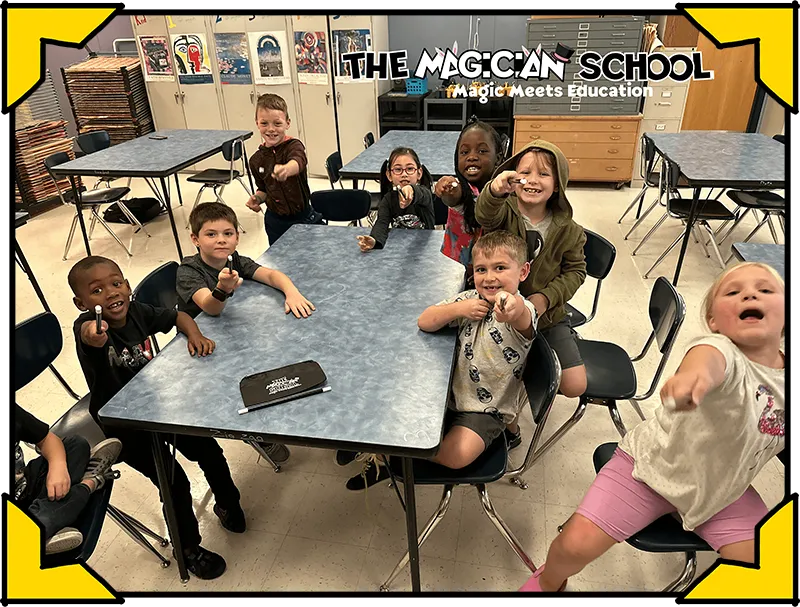
Besides being able to show off a cool new magic trick, students enrolled in The Magician School learn real life skills through each lesson. Magic is more than entertainment, it’s education and the skills developed are some that will give students tools they can use in all stages of life. From dexterity to confidence, there are no downsides to learning magic.
Communication and Public Speaking

It’s safe to say a majority of people have a fear of public speaking. Large groups, small groups, it doesn’t matter, speaking confidently in front of a group of people is not an easy task. Here at the Magician School we totally understand! The Magician School fosters a safe and encouraging environment for students to conquer their fear and stand in front of a group and present a magic trick.
Instead of focusing on the fact that a student will have to stand in front of a group, we focus on the task of performing a magic trick (that just so happens to be in front of a large group). Students enrolled in The Magician School learn a new magic trick each week, and they do this together. Every student in the program is learning the same magic trick at the same time. This eases the student’s mind because everyone is on the same level and started from the same place.
When performing a magic trick, the words said hold power and are important. Magicians shouldn't always say exactly what they are thinking because it might reveal the secret to the trick. In each lesson, a formal script is practiced during the magic trick to help give students guidance on what to say. This allows the students to focus on how and why we communicate what we are doing as magicians.
Dexterity and Coordination

Ever wonder how a magician quickly fans a deck of cards in front of you? Many magic tricks, especially sleight-of-hand tricks (cards or coins) require precise hand movements. Performing magic tricks can help develop fine motor skills and improve dexterity and coordination.
Magic tricks can also improve finger strength, hand-eye coordination and the ability to manipulate small objects. These skills can be beneficial for students who have difficulties with fine motor skills, such as those with dyspraxia or other motor coordination disorders.
Not only will students be able to perform better magic tricks, but with all of their practice, they will improve other areas of their life like writing, drawing and playing musical instruments. We’re not saying you should do finger and hand warm ups, but we aren’t saying they will hurt!
Improved Social Skills

Learning magic is like knowing a good joke. It helps break the ice in new situations and connects students who may have never spoken before. Besides having the confidence to talk in a group or to a new person, there are a whole set of Social Skills students can learn through magic. From successfully interacting with peers to having a better understanding of the world around them, new magicians gain so much more than a new magic trick.
The Magician School has put a heavy emphasis on ensuring Social Literacy Skills are in its curriculum. We understand the words we say and the way we interact with others is important. Which is why we try to meet students where they are when working on verbal and nonverbal communications.
Enhance Creativity and Problem Solving Skills

Creativity and problem solving go hand in hand. Students need to be encouraged to embrace and follow their creativity. Whether it is in the classroom or beyond, creativity is a valuable skill to hold. Learning and practicing magic tricks can be a great way for students to “think outside the box.”
By learning magic, students start to look at the world a little differently and question things a whole lot more. This also encourages problem solving skills, to find unique ways to approach challenging situations. Magicians are constantly trying to find solutions to planned and unplanned problems that may occur. It only makes sense to be honest with students that things won’t always go how they planned (both magically and in life), so learning these problem solving skills early will help them in the long run.
A study conducted at the University of Hertfordshire suggests learning magic is “the key to unlocking children’s creative thinking.”
Patience

Magic tricks can be challenging to master. Often, students are required to practice and repeat the same trick multiple times in order to perfect it. Which can get a) frustrating and b) boring. But, this process can help students develop a greater sense of patience, persistence and determination. Even the greatest magicians don’t pull a bunny out of a hat on the first try!
By persevering through the challenging aspects of learning magic tricks, students can learn to approach difficult tasks with a positive and patient attitude. And we all know how important it is these days to approach life with a little more positivity and patience.
In all of the Magician School Curriculums, we have seen student’s evolution of practice and patience. In the A+ Card Tricks Program, most students have never shuffled a deck of cards before, let alone held a deck of cards in their hands. Over time, with a whole lot of practice, these students master those skills. Even in the Magic 101: Intro to Magic Program, the very first trick taught won’t be mastered by students on their first attempt. Once the frustration is overcome, and a lot more practice is put in, every student is able to perform the magic trick.
Confidence and Self Esteem

Magic helps students express who they are. They get to wow a crowd, be the keeper of secrets, and share curiosities among fellow magicians. All of those things feel amazing for young magicians. The increase in confidence and self esteem seen among students who practice magic is through the roof.
Don’t believe us or want to see it for yourself? Sign up for The Magician School today!

THE MAGICIAN SCHOOL, LLC 900 Keosauqua Way #309 Des Moines, IA 50309